AI Content Kya Hai

AI Content Kya Hai — independent reviews, comparisons, pricing and step-by-step guides on Aizhi.

  • Realization (linguistics)

    Realization (linguistics)

    In linguistics, realization is the process by which some kind of surface representation is derived from its underlying representation; that is, the way in which some abstract object of linguistic analysis comes to be produced in actual language. Phonemes are often said to be realized by speech sounds. The different sounds that can realize a particular phoneme are called its allophones. Realization is also a subtask of natural language generation, which involves creating an actual text in a human language (English, French, etc.) from a syntactic representation. There are a number of software packages available for realization, most of which have been developed by academic research groups in NLG. The remainder of this article concerns realization of this kind. == Example == For example, the following Java code causes the simplenlg system [2] to print out the text The women do not smoke.: In this example, the computer program has specified the linguistic constituents of the sentence (verb, subject), and also linguistic features (plural subject, negated), and from this information the realiser has constructed the actual sentence. == Processing == Realisation involves three kinds of processing: Syntactic realisation: Using grammatical knowledge to choose inflections, add function words and also to decide the order of components. For example, in English the subject usually precedes the verb, and the negated form of smoke is do not smoke. Morphological realisation: Computing inflected forms, for example the plural form of woman is women (not womans). Orthographic realisation: Dealing with casing, punctuation, and formatting. For example, capitalising The because it is the first word of the sentence. The above examples are very basic, most realisers are capable of considerably more complex processing. == Systems == A number of realisers have been developed over the past 20 years. These systems differ in terms of complexity and sophistication of their processing, robustness in dealing with unusual cases, and whether they are accessed programmatically via an API or whether they take a textual representation of a syntactic structure as their input. There are also major differences in pragmatic factors such as documentation, support, licensing terms, speed and memory usage, etc. It is not possible to describe all realisers here, but a few of the emerging areas are: Simplenlg [3]: a document realizing engine with an api which intended to be simple to learn and use, focused on limiting scope to only finding the surface area of a document. KPML [4]: this is the oldest realiser, which has been under development under different guises since the 1980s. It comes with grammars for ten different languages. FUF/SURGE [5]: a realiser which was widely used in the 1990s, and is still used in some projects today OpenCCG [6]: an open-source realiser which has a number of nice features, such as the ability to use statistical language models to make realisation decisions.

    Read more →
  • Circle Hough Transform

    Circle Hough Transform

    The circle Hough Transform (CHT) is a basic feature extraction technique used in digital image processing for detecting circles in imperfect images. The circle candidates are produced by “voting” in the Hough parameter space and then selecting local maxima in an accumulator matrix. It is a specialization of the Hough transform. == Theory == In a two-dimensional space, a circle can be described by: ( x − a ) 2 + ( y − b ) 2 = r 2 ( 1 ) {\displaystyle \left(x-a\right)^{2}+\left(y-b\right)^{2}=r^{2}\ \ \ \ \ (1)} where (a,b) is the center of the circle, and r is the radius. If a 2D point (x,y) is fixed, then the parameters can be found according to (1). The parameter space would be three dimensional, (a, b, r). And all the parameters that satisfy (x, y) would lie on the surface of an inverted right-angled cone whose apex is at (x, y, 0). In the 3D space, the circle parameters can be identified by the intersection of many conic surfaces that are defined by points on the 2D circle. This process can be divided into two stages. The first stage is fixing radius then find the optimal center of circles in a 2D parameter space. The second stage is to find the optimal radius in a one dimensional parameter space. === Find parameters with known radius R === If the radius is fixed, then the parameter space would be reduced to 2D (the position of the circle center). For each point (x, y) on the original circle, it can define a circle centered at (x, y) with radius R according to (1). The intersection point of all such circles in the parameter space would be corresponding to the center point of the original circle. Consider 4 points on a circle in the original image (left). The circle Hough transform is shown in the right. Note that the radius is assumed to be known. For each (x,y) of the four points (white points) in the original image, it can define a circle in the Hough parameter space centered at (x, y) with radius r. An accumulator matrix is used for tracking the intersection point. In the parameter space, the voting number of those points that have a newly defined circle passing through them would be increased by one for every circle. Then the local maxima point (the red point in the center in the right figure) can be found. The position (a, b) of the maxima would be the center of the original circle. === Multiple circles with known radius R === Multiple circles with same radius can be found with the same technique. Note that, in the accumulator matrix (right fig), there would be at least 3 local maxima points. === Accumulator matrix and voting === In practice, an accumulator matrix is introduced to find the intersection point in the parameter space. First, we need to divide the parameter space into “buckets” using a grid and produce an accumulator matrix according to the grid. The element in the accumulator matrix denotes the number of “circles” in the parameter space that are passing through the corresponding grid cell in the parameter space. The number is also called “voting number”. Initially, every element in the matrix is zeros. Then for each “edge” point in the original space, we can formulate a circle in the parameter space and increase the voting number of the grid cell which the circle passes through. This process is called “voting”. After voting, we can find local maxima in the accumulator matrix. The positions of the local maxima are corresponding to the circle centers in the original space. === Find circle parameter with unknown radius === Since the parameter space is 3D, the accumulator matrix would be 3D, too. We can iterate through possible radii; for each radius, we use the previous technique. Finally, find the local maxima in the 3D accumulator matrix. Accumulator array should be A[x,y,r] in the 3D space. Voting should be for each pixels, radius and theta A[x,y,r] += 1 The algorithm : For each A[a,b,r] = 0; Process the filtering algorithm on image Gaussian Blurring, convert the image to grayscale ( grayScaling), make Canny operator, The Canny operator gives the edges on image. Vote on all possible circles in accumulator. The local maximum voted circles of Accumulator A gives the circle Hough space. The maximum voted circle of Accumulator gives the circle. The Incrementing for Best Candidate : For each A[a,b,r] = 0; // fill with zeroes initially, instantiate 3D matrix For each cell(x,y) For each theta t = 0 to 360 // the possible theta 0 to 360 b = y – r sin(t PI / 180); //polar coordinate for center (convert to radians) a = x – r cos(t PI / 180); //polar coordinate for center (convert to radians) A[a,b,r] +=1; //voting end end == Examples == === Find circles in a shoe-print === The original picture (right) is first turned into a binary image (left) using a threshold and Gaussian filter. Then edges (mid) are found from it using canny edge detection. After this, all the edge points are used by the Circle Hough Transform to find underlying circle structure. == Limitations == Since the parameter space of the CHT is three dimensional, it may require lots of storage and computation. Choosing a bigger grid size can ameliorate this problem. However, choosing an appropriate grid size is difficult. Since too coarse a grid can lead to large values of the vote being obtained falsely because many quite different structures correspond to a single bucket. Too fine a grid can lead to structures not being found because votes resulting from tokens that are not exactly aligned end up in different buckets, and no bucket has a large vote. Also, the CHT is not very robust to noise. == Extensions == === Adaptive Hough Transform === J. Illingworth and J. Kittler introduced this method for implementing Hough Transform efficiently. The AHT uses a small accumulator array and the idea of a flexible iterative "coarse to fine" accumulation and search strategy to identify significant peaks in the Hough parameter spaces. This method is substantially superior to the standard Hough Transform implementation in both storage and computational requirements. == Application == === People Counting === Since the head would be similar to a circle in an image, CHT can be used for detecting heads in a picture, so as to count the number of persons in the image. === Brain Aneurysm Detection === Modified Hough Circle Transform (MHCT) is used on the image extracted from Digital Subtraction Angiogram (DSA) to detect and classify aneurysms type. == Implementation code == Circle Detection via Standard Hough Transform, by Amin Sarafraz, Mathworks (File Exchange) Hough Circle Transform, OpenCV-Python Tutorials (archived version on archive.org)

    Read more →
  • Douglas Parkhill

    Douglas Parkhill

    Douglas F. Parkhill is a Canadian technologist and former research minister, best known for his pioneering work on what is now called cloud computing, and his work on Canada's Telidon videotex project. He started working at the Canadian ministry of Communications (now part of the Department of Trade and Industry) in 1969, having previously worked at the Mitre Corporation. He was responsible for many activities in communications satellites, computer communications, command and control systems and telecommunications. He was winner of the Treasury Board of Canada Secretariat's Outstanding Achievement award in 1982, the Conestoga shield for services to government and industry in computer communications research and development, the Touche Ross award for Telidon development. He was an author of several publications including the 1966 book, The Challenge of the Computer Utility. In the book, Parkhill thoroughly explored many of the modern-day characteristics of cloud computing (elastic provisioning through a utility service) as well as the comparison to the electricity industry and the use of public, private, government and community forms. The book won the McKinsey Foundation award for distinguished contributions to management literature. He worked with Dave Godfrey, the Canadian writer and novelist on a later book Gutenberg two about the social and political meaning of computer technology. He was in charge of research at the Federal Department of Communications at the time when the department was funding development of the Telidon videotext system, was heavily involved in promoting the system, and had overall control of the program. In a radio broadcast in 1980, he outlined some of the potential of the system, from financial information, to theatre reservations, with the ability to pay and print out tickets from the system. He later documented the history of the Telidon project, and the history of videotext in general. == Publications == The Challenge of the Computer Utility, Addison-Wesley, 1966, ISBN 0-201-05720-4 edited with Dave Godfrey, Gutenberg Two: The New Electronics and Social Change, Press Porcepic, 1979, ISBN 0-88878-191-1 The Beginning of a Beginning. Ottawa; Department of Communications, 1987. A history of the Telidon project.

    Read more →
  • Networked Help Desk

    Networked Help Desk

    Networked Help Desk is an open standard initiative to provide a common API for sharing customer support tickets between separate instances of issue tracking, bug tracking, customer relationship management (CRM) and project management systems to improve customer service and reduce vendor lock-in. The initiative was created by Zendesk in June 2011 in collaboration with eight other founding member organizations including Atlassian, New Relic, OTRS, Pivotal Tracker, ServiceNow and SugarCRM. The first integration, between Zendesk and Atlassian's issue tracking product, Jira, was announced at the 2011 Atlassian Summit. By August 2011, 34 member companies had joined the initiative. A year after launching, over 50 organizations had joined. Within Zendesk instances this feature is branded as ticket sharing. == Basis == Support tools are generally built around a common paradigm that begins with a customer making a request or an incident report, these create a ticket. Each ticket has a progress status and is updated with annotations and attachments. These annotations and attachments may be visible to the customer (public), or only visible to analysts (private). Customers are notified of progress made on their ticket until it is complete. If the people necessary to complete a ticket are using separate support tools, additional overhead is introduced in maintaining the relevant information in the ticket in each tool while notifying the customer of progress made by each group in completing their ticket. For example, if a customer support issue is caused by a software bug and reported to a help desk using one system, and then the fix is documented by the developers in another, and analyzed in a customer relationship management tool, keeping the records in each system up-to-date and notifying the customer manually using a swivel chair approach is unnecessarily time-consuming and error-prone. If information is not transferred correctly, a customer may have to re-explain their problem each time their ticket is transferred. For systems with the Networked Help Desk API implemented, it is possible for several different applications related to a customer's support experience to synchronize data in one uniquely identified shared ticket. While many applications in these domains have implemented APIs that allow data to be imported, exported and modified, Network Help Desk provide a common standard for customer support information to automatically synchronize between several systems. Once implemented, two systems can quickly share tickets with just a configuration change as they both understand the same interface. Communication between two instances on a specific ticket occurs in three steps, an invitation agreement, sharing of ticket data and continued synchronization of tickets. The standard allows for "full delegation" (analysts in both systems each make public and private comments and synchronize status) as well as "partial delegation" where the instance receiving the ticket can only make private comments and status changes are not synchronized. Tickets may be shared with multiple instances. == Implementation list ==

    Read more →
  • Tinybop

    Tinybop

    Tinybop is a Brooklyn based publisher of apps for children. == History == Tinybop is a Brooklyn-based children's media company established in 2011 by Raul Gutierrez. App titles are released in two series: the Explorer's Library - a series of science apps and Digital Toys - series of open-ended construction apps. == Published apps == Explorer's Library Titles: The Human Body – An anatomy app for children. Released 2013. The company's first app was illustrated by Kelli Anderson and has been downloaded millions of times. Selected for the American Library Association's Notable Children's Media List in 2022. Named Apple App Store's Best of 2013. Winner of the Digital Ehon Yuichi Kimura Prize for Children's Digital Media. Plants – An app about biomes around the world. Homes – An app about houses around with world. Illustrated by Tuesday Bassen. Winner of the Parents Gold Choice Award for children's apps. Simple Machines – A children's physics app about simple machines. The Earth – An app for children about the geologic Earth illustrated by Sarah Jacoby. Weather – A children's weather app. Skyscrapers – A children's app about building tall buildings. Space – An interactive solar system. Mammals – A children's app about mammals illustrated by Wenjia Tang. Winner of the Digital Ehon Award for Children's Educational media. Coral Reef – An app about marine ecosystems. Winner of an Excellence in Early Learning Digital Media Honor from the American Library Association. State of Matter – An app covering solids, liquids, and gases. Winner of Excellence in Early Learning Digital Media Honor from the American Library Association. Light and Color – An app about light and color. Selected for The American Library Association's Notable Children's Media List 2023. Winner of the 2022 Yoichi Sakakihara Prize for Children's Media. Digital Toys Titles: The Robot Factory – A robot building app for children illustrated by Owen Davey. Apple named The Robot Factory as iPad App of the Year in 2015. The Everything Machine – A visual coding app for children. The Everything Machine was named Apple's Best of 2015. Monsters – A monster creation app illustrated by Tianhua Mao. The Infinite Arcade – An arcade game building app. Me: A Kids Diary – A digital journal for children. Selected for The American Library Association's Notable Children's Media List 2020. The Creature Garden – An app that allows children to create fantastical animals illustrated by Natasha Durley. Selected for The American Library Association's Notable Children's Media List 2021. Things that Go Bump – A multiplayer game set in an enchanted Japanese house, released on Apple Arcade in 2018.

    Read more →
  • Wix.com

    Wix.com

    Wix.com Ltd. (Hebrew: וויקס.קום, romanized: wix.com) or simply Wix is an Israeli software company, publicly listed in the US, that provides cloud-based web development services. It offers tools for creating HTML5 websites for desktop and mobile platforms using online drag-and-drop editing. Along with its headquarters and other offices in Israel, Wix also has offices in Brazil, Canada, Germany, India, Ireland, Japan, Lithuania, Poland, the Netherlands, the United States, Ukraine, and Singapore. Users can add applications for social media, e-commerce, online marketing, contact forms, e-mail marketing, and community forums to their websites. The Wix website builder is built on a freemium business model, earning its revenues through premium upgrades. According to the W3Techs technology survey website, Wix was used by 2.5% of websites as of September 2023; at the end of May 2025, it was 3.8%. == History == === Corporate affairs === Wix was founded in 2006 by Israeli developers Avishai Abrahami, Nadav Abrahami, and Giora Kaplan. With its main offices in Tel Aviv, Wix was backed by investors Insight Venture Partners, Mangrove Capital Partners, Bessemer Venture Partners, DAG Ventures, and Benchmark Capital. By April 2010, Wix had 3.5 million users and raised US$10 million in Series C funding provided by Benchmark Capital and existing investors Bessemer Venture Partners and Mangrove Capital Partners. In March 2011, Wix had 8.5 million users and raised US$40 million in Series D funding, bringing its total funding to that date to US$61 million. By August 2013, the Wix platform had more than 34 million registered users. On 5 November 2013, Wix had an initial public offering on NASDAQ, raising about US$127 million for the company and some share holders. In 2016, Mark Tluszcz became the chair of the board of directors. In 2020, Wix's revenue increased to $989 million, a 30% rise year-on-year, primarily due to the shift of businesses online during the coronavirus pandemic. The company added over 31 million new registered users in 2020, reaching a total of 196.7 million by year's end. Wix added approximately 1 million net new premium subscriptions in 2020, surpassing $1 billion in annual collections for the first time. By the end of the year, there were 5.5 million premium subscriptions, a 22% increase compared to the end of 2019. As of its most recent reporting in June 2024, Wix has over 260 million users worldwide. === Product development === ==== 2000s ==== Wix entered an open beta phase in 2007 using a platform based on Adobe Flash. ==== 2010s ==== In June 2011, Wix launched the Facebook store module, making its first step into social commerce. In March 2012, Wix launched a new HTML5 site builder, replacing the Adobe Flash technology. In October 2012, Wix launched an app market for users to sell applications built with the company's automated web development technology. In August 2014, Wix launched Wix Hotels, a booking system for hotels, bed and breakfasts, and vacation rentals that use Wix websites. In June 2016, Wix introduced Wix ADI (Artificial Design Intelligence), a platform that uses artificial intelligence to design websites. ==== 2020s ==== In 2020, Wix launched an additional CMS, EditorX, which included additional CSS features to the original builder. In July 2023, Wix announced that it would be building on its ADI technology to create an AI powered website generator In October 2023, Wix launched the Wix Studio website builder. Co-founder and CEO, Avishai Abrahami described the platform as a “product for agencies”. In March 2024, the AI web builder, which uses a chatbot to help users create content was launched to the public. In March 2025, the digital publisher CNET has identified Wix as the "Best overall website builder overall." In August 2025, Wix announced it would launch banking services—including checking accounts and loans for small businesses—via a partnership with Israeli fintech Unit Finance, as it sought to diversify amid what it described as threats to its core website-building business from artificial intelligence. In January 2026, Wix launched Wix Harmony. Wix harmony is an AI website builder that uses agentic technology, generative design and vibe coding—with manual editing features for additional control. In May 2026, Wix announced layoffs affecting approximately 1,000 employees, or 20% of its workforce. CEO Avishai Abrahami cited two factors: the need to restructure around artificial intelligence and the appreciation of the Israeli shekel against the US dollar, which increased the cost of its Israel-based workforce relative to its dollar-denominated revenue. === Acquisitions === In April 2014, Wix announced the acquisition of Appixia, an Israeli startup for creating native mobile commerce (mCommerce) apps. In October 2014, Wix announced its acquisition of OpenRest, a developer of online ordering systems for restaurants. In April 2015, Wix acquired Moment.me, a mobile website builder for events and marketing tools for social lead generation. On 23 February 2017, Wix acquired the online art community DeviantArt for US$36 million. In January 2017, the company acquired Flok, a provider of customer loyalty programs tools. In February 2020, Wix acquired Inkfrog for eBay sellers, a web design company that provides customized business management software for eBay sellers. On 2 March 2021, Wix acquired SpeedETab, a Miami-based restaurant online technology provider. In May 2021, Wix acquired Rise.ai, a gift card and customer re-engagement package for online brands. A month later, Wix acquired Modalyst, a marketplace and drop-shipping platform. In May 2025, Wix acquired Hour One, a startup specializing in AI-powered video creation tools, to enhance its generative AI capabilities. In June 2025, the company acquired Base44, owned by independent entrepreneur Maor Shlomo, with the intention of integrating Base44's artificial intelligence capabilities and conversational interface into Wix's website and app building platform. == Description == Wix uses a freemium business model. Users can create websites for free then must purchase premium packages to connect their sites to their own domains, remove Wix ads, access the form builder, add e-commerce capabilities, or buy extra data storage and bandwidth. Wix provides customizable website templates and a drag-and-drop HTML5 website builder that includes apps, graphics, image galleries, fonts, vectors, animations, and other options. Users also may opt to create their web sites from scratch. In October 2013, Wix introduced a mobile editor for mobile viewing customization. Wix App Market offers both free and subscription-based applications, with a revenue split of 80% for the developer and 20% for Wix. Customers can integrate third-party applications into their own web sites, such as photograph feeds, blogging, music playlists, online community, e-mail marketing, and file management. Custom JavaScript code can be inserted into Wix webpages using the Velo API. == Controversies == === Use of WordPress code === In October 2016, there was a controversy over Wix's use of WordPress's GPL-licensed code. In response, Avishai Abrahami, Wix's CEO, published a response describing which open-source code was used and how Wix says it collaborates with the open-source community. However, it was subsequently noted that collaboration with the open-source community was not sufficient under the terms of the GPL license, which requires any code built on GPL-licensed code to be released under the same license. === Censorship === On 31 May 2021, 2021 Hong Kong Charter, a Wix-hosted website run by exiled Hong Kong activists, was shut down at the request of the Hong Kong Police. This was the first known case of Hong Kong's National Security Law being used to censor content on an overseas website. Wix later apologized for "mistakenly removing the website" and reinstated the website after it had been down for four days. In October 2023, Wix fired an employee in Dublin, Ireland, for having made social media posts critical of Israel. This incident led to criticism of Wix from members of the Oireachtas (the Irish parliament) and from the head of the Irish government, Taoiseach Leo Varadkar, who said it was "not okay to dismiss somebody because of their political views". Deputy head of government, Tánaiste Micheál Martin, also condemned their dismissal, stating "we tolerate debate with freedom of speech, freedom of opinion, and people have different opinions on these issues." The dismissed employee, Courtney Carey, successfully sued the company for unfair dismissal. Wix did not contest the charge, admitting liability. === Outreach abroad === In October 2023, The Irish Times reported that an Israeli advertising agency advised Wix staff how they can tailor posts for "outreach abroad". This included advice for Wix employees to “show Westernity” in social media posts supporting Israel, stating that “unlike the Gazans,

    Read more →
  • Programming tool

    Programming tool

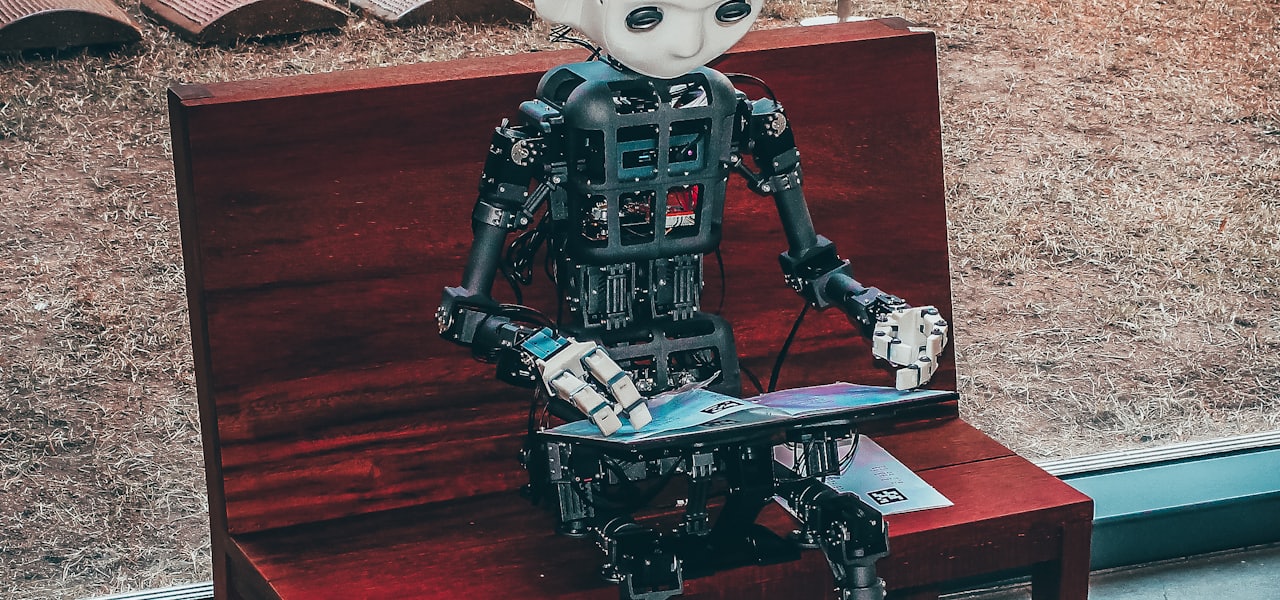
    A programming tool or software development tool is a computer program that is used to develop another computer program, usually by helping the developer manage computer files. For example, a programmer may use a tool called a source code editor to edit source code files, and then a compiler to convert the source code into machine code files. They may also use build tools that automatically package executable program and data files into shareable packages or install kits. A set of tools that are run one after another, with each tool feeding its output to the next one, is called a toolchain. An integrated development environment (IDE) integrates the function of several tools into a single program. Usually, an IDE provides a source code editor as well as other built-in or plug-in tools that help with compiling, debugging, and testing. Whether a program is considered a development tool can be subjective. Some programs, such as the GNU compiler collection, are used exclusively for software development while others, such as Notepad, are not meant specifically for development but are nevertheless often used for programming. == Categories == Notable categories of development tools: Assembler – Converts assembly language into machine code Bug tracking system – Software application that records software bugs Build automation – Building software via an unattended fashion Code review software – Activity where one or more people check a program's code Compiler – Software that translates code from one programming language to another Compiler-compiler – Program that generates parsers or compilers, a.k.a. parser generator Debugger – Software for debugging a computer program Decompiler – Program translating executable to source code Disassembler – Computer program to translate machine language into assembly language Documentation generator – Automation technology for creating software documentation Graphical user interface builder – Software development tool Linker – Program that combines intermediate build files into an executable file Loader – Loads executable files into memory and prepares them for execution by the CPU. Memory debugger – Software memory problem finder Minifier – Removal of unnecessary characters in code without changing its functionality Pretty-printer – Formatting to make code or markup easier to readPages displaying short descriptions of redirect targets Performance profiler – Measuring the time or resources used by a section of a computer program Static code analyzer – Analysis of computer programs without executing themPages displaying short descriptions of redirect targets Source code editor – Text editor specializing in software codePages displaying short descriptions of redirect targets Source code generation – Type of computer programmingPages displaying short descriptions of redirect targets Version control system – Stores and tracks versions of files

    Read more →
  • Quickly (software)

    Quickly (software)

    Quickly is a framework for creating software programs for a Linux distribution using Python, PyGTK, Glade Interface Designer and Desktop Couch. It then allows for easy publishing using bzr and Launchpad. Quickly is designed to speed up the start of new projects with the use of templates, not only for programs but for any type of project. These templates are used to automate project configuration and maintenance. Delegating into templates and not into a specific library allows projects created using Quickly not to require dependencies on any particular library or runtime of Quickly itself. The project was started by Rick Spencer after his frustration as a beginner Ubuntu developer. == Updates == Last available software update is on 2013-01-31 for Ubuntu 11.04.

    Read more →
  • Artificial consciousness

    Artificial consciousness

    Artificial consciousness, also known as machine consciousness, synthetic consciousness, or digital consciousness, is consciousness hypothesized to be possible for artificial intelligence. It is also the corresponding field of study, which draws insights from philosophy of mind, philosophy of artificial intelligence, cognitive science and neuroscience. The term "sentience" can be used when specifically designating ethical considerations stemming from a form of phenomenal consciousness (P-consciousness, or the ability to feel qualia). Since sentience involves the ability to experience ethically positive or negative (i.e., valenced) mental states, it may justify welfare concerns and legal protection, as with non-human animals. Some scholars believe that consciousness is generated by the interoperation of various parts of the brain; these mechanisms are labeled the neural correlates of consciousness (NCC). Some further believe that constructing a system (e.g., a computer system) that can emulate this NCC interoperation would result in a system that is conscious. Some scholars reject the possibility of non-biological conscious beings. == Philosophical views == As there are many hypothesized types of consciousness, there are many potential implementations of artificial consciousness. In the philosophical literature, perhaps the most common taxonomy of consciousness is into "access" and "phenomenal" variants. Access consciousness concerns those aspects of experience that can be apprehended, while phenomenal consciousness concerns those aspects of experience that seemingly cannot be apprehended, instead being characterized qualitatively in terms of "raw feels", "what it is like" or qualia. === Plausibility debate === Type-identity theorists and other skeptics hold the view that consciousness can be realized only in particular physical systems because consciousness has properties that necessarily depend on physical constitution. In his 2001 article "Artificial Consciousness: Utopia or Real Possibility," Giorgio Buttazzo says that a common objection to artificial consciousness is that, "Working in a fully automated mode, they [the computers] cannot exhibit creativity, unreprogrammation (which means can 'no longer be reprogrammed', from rethinking), emotions, or free will. A computer, like a washing machine, is a slave operated by its components." For other theorists (e.g., functionalists), who define mental states in terms of causal roles, any system that can instantiate the same pattern of causal roles, regardless of physical constitution, will instantiate the same mental states, including consciousness. ==== Thought experiments ==== David Chalmers proposed two thought experiments intending to demonstrate that "functionally isomorphic" systems (those with the same "fine-grained functional organization", i.e., the same information processing) will have qualitatively identical conscious experiences, regardless of whether they are based on biological neurons or digital hardware. The "fading qualia" is a reductio ad absurdum thought experiment. It involves replacing, one by one, the neurons of a brain with a functionally identical component, for example based on a silicon chip. Chalmers makes the hypothesis, knowing it in advance to be absurd, that "the qualia fade or disappear" when neurons are replaced one-by-one with identical silicon equivalents. Since the original neurons and their silicon counterparts are functionally identical, the brain's information processing should remain unchanged, and the subject's behaviour and introspective reports would stay exactly the same. Chalmers argues that this leads to an absurd conclusion: the subject would continue to report normal conscious experiences even as their actual qualia fade away. He concludes that the subject's qualia actually don't fade, and that the resulting robotic brain, once every neuron is replaced, would remain just as sentient as the original biological brain. Similarly, the "dancing qualia" thought experiment is another reductio ad absurdum argument. It supposes that two functionally isomorphic systems could have different perceptions (for instance, seeing the same object in different colors, like red and blue). It involves a switch that alternates between a chunk of brain that causes the perception of red, and a functionally isomorphic silicon chip, that causes the perception of blue. Since both perform the same function within the brain, the subject would not notice any change during the switch. Chalmers argues that this would be highly implausible if the qualia were truly switching between red and blue, hence the contradiction. Therefore, he concludes that the equivalent digital system would not only experience qualia, but it would perceive the same qualia as the biological system (e.g., seeing the same color). Greg Egan's short story Learning To Be Me (mentioned in §In fiction), illustrates how undetectable duplication of the brain and its functionality could be from a first-person perspective. Critics object that Chalmers' proposal begs the question in assuming that all mental properties and external connections are already sufficiently captured by abstract causal organization. Van Heuveln et al. argue that the dancing qualia argument contains an equivocation fallacy, conflating a "change in experience" between two systems with an "experience of change" within a single system. Mogensen argues that the fading qualia argument can be resisted by appealing to vagueness at the boundaries of consciousness and the holistic structure of conscious neural activity, which suggests consciousness may require specific biological substrates rather than being substrate-independent. Anil Seth argues that the complexity of brain neurons intrinsically matters in addition to their function and that it is not possible to replace any part of the brain with a perfect silicon equivalent. He points out that some of biological neurons exhibit activity aimed at cleaning up metabolic waste products, and writes that a perfect silicon replacement would require a silicon-based metabolism, but silicon is not suitable for creating such artificial metabolism. ==== In large language models ==== In 2022, Google engineer Blake Lemoine made a viral claim that Google's LaMDA chatbot was sentient. Lemoine supplied as evidence the chatbot's humanlike answers to many of his questions; however, the chatbot's behavior was judged by the scientific community as likely a consequence of mimicry, rather than machine sentience. Lemoine's claim was widely derided for being ridiculous. Moreover, attributing consciousness based solely on the basis of LLM outputs or the immersive experience created by an algorithm is considered a fallacy. However, while philosopher Nick Bostrom states that LaMDA is unlikely to be conscious, he additionally poses the question of "what grounds would a person have for being sure about it?" One would have to have access to unpublished information about LaMDA's architecture, and also would have to understand how consciousness works, and then figure out how to map the philosophy onto the machine: "(In the absence of these steps), it seems like one should be maybe a little bit uncertain. [...] there could well be other systems now, or in the relatively near future, that would start to satisfy the criteria." David Chalmers argued in 2023 that LLMs today display impressive conversational and general intelligence abilities, but are likely not conscious yet, as they lack some features that may be necessary, such as recurrent processing, a global workspace, and unified agency. Nonetheless, he considers that non-biological systems can be conscious, and suggested that future, extended models (LLM+s) incorporating these elements might eventually meet the criteria for consciousness, raising both profound scientific questions and significant ethical challenges. However, the view that consciousness can exist without biological phenomena is controversial and some reject it. Kristina Šekrst cautions that anthropomorphic terms such as "hallucination" can obscure important ontological differences between artificial and human cognition. While LLMs may produce human-like outputs, she argues that it does not justify ascribing mental states or consciousness to them. Instead, she advocates for an epistemological framework (such as reliabilism) that recognizes the distinct nature of AI knowledge production. She suggests that apparent understanding in LLMs may be a sophisticated form of AI hallucination. She also questions what would happen if an LLM were trained without any mention of consciousness. === Testing === Sentience is an inherently first-person phenomenon. Because of that, and due to the lack of an empirical definition of sentience, directly measuring it may be impossible. Although systems may display numerous behaviors correlated with sentience, determining whether a system is sentient is known as the hard pr

    Read more →
  • Pocket (service)

    Pocket (service)

    Pocket, formerly known as Read It Later, was a social bookmarking service for storing, sharing and discovering web bookmarks, first released in 2007. Mozilla, the developer of Pocket, announced in May 2025 that it was discontinuing the service and would shut it down in July of that year. == History == Pocket was introduced in August 2007 as a Mozilla Firefox browser extension named Read It Later by Nathan (Nate) Weiner. Once his product was used by millions of people, he moved his office to Silicon Valley and four other people joined the Read It Later team. Weiner's intention was for the application to be like a TiVo directory for web content and to give users access to that content on any device. Read It Later obtained venture capital investments of US$2.5 million in 2011 and $5.0 million in 2012. The 2011 funding came from Foundation Capital, Baseline Ventures, Google Ventures, Founder Collective and unnamed angel investors. The company rejected an acquisition offer by Evernote after showing concerns that Evernote intended to shut down the Read It Later service and amalgamate its functionality into Evernote's main service. Initially, the Read It Later app was available in a free version and a paid version that included additional features. After the rebranding to Pocket, all paid features were made available in a free and advertisement-free app. In May 2014, a paid subscription service called Pocket Premium was introduced, adding server-side storage of articles and more powerful search tools. In June 2015, Pocket was included in Firefox, via a toolbar button and link to a user's Pocket list in the bookmark's menu. The integration was controversial, as users displayed concerns for the direct integration of a proprietary service into an open source application, and that it could not be completely disabled without editing advanced settings, unlike other third-party extensions. A Mozilla spokesperson stated that the feature was meant to leverage the service's popularity among Firefox users and clarified that all code related to the integration was open source. The spokesperson added that "[Mozilla had] gotten lots of positive feedback about the integration from users". On February 27, 2017, Pocket announced that it had been acquired by Mozilla Corporation, the commercial arm of Firefox's non-profit development group. Mozilla staff stated that Pocket would continue to operate as an independent subsidiary but that it would be leveraged as part of an ongoing "Context Graph" project. There were plans to open-source the server-side code of Pocket, though only parts of the project had been open-sourced as of 2024. On May 22, 2025, Mozilla announced that it would shut down Pocket on July 8, 2025. Exports of user data would be available until October 8, 2025, when accounts would be deleted. The email newsletter Pocket Hits was rebranded as Ten Tabs on June 12 as part of the closure, with it being changed to release only on weekdays. == Functions == The application allows the user to save an article or web page to remote servers for later reading. The article is sent to the user's Pocket list (synced to all of their devices) for offline reading. Pocket makes the article more readable by removing clutter and enabling the user to add tags and adjust text settings. == User base == The application had 17 million users and 1 billion saves, as of September 2015. Pocket was listed among Time magazine's 50 Best Android Applications for 2013. == Reception == Kent German of CNET said that "Read It Later is oh so incredibly useful for saving all the articles and news stories I find while commuting or waiting in line." Erez Zukerman of PC World said that supporting the developer is enough reason to buy what he deemed a "handy app". Bill Barol of Forbes said that although Read It Later works less well than Instapaper, "it makes my beloved Instapaper look and feel a little stodgy." In 2015, Pocket was awarded a Material Design Award for Adaptive Layout by Google for their Android application.

    Read more →
  • LiveChat

    LiveChat

    LiveChat is an AI customer service software with chatbot, online chat, help desk software, and web analytics capabilities. LiveChat is used by over 76,000 companies. It was first launched in 2002 and is offered via a SaaS (software as a service) business model by Text. Organizations use LiveChat as a single point of contact to manage customer service and online sales activities with a single program. == Product == LiveChat is proprietary software. LiveChat's website chat widget can be embedded on customers' websites as a small chat box, often displayed in the bottom right corner of the web browser. It can be used to conduct chats, share files and save transcripts. The agent application is used by company employees to respond to questions asked by the customers. This is available through both web-based application, desktop applications, and mobile apps. Web chat sessions can be initiated by the visiting customer, or by the agent, either manually or automatically by the LiveChat system when the visitor meets the predefined criteria (i.e. searched keyword, time on website, encountered error, etc.). LiveChat's system attempts to identify the best prospects visiting a website based on data gathered from past purchasing decisions. Other features include real-time website traffic monitoring, built-in ticketing system and agents' efficiency analytics. LiveChat is available in 48 languages. == Research and reception == Reviewing LiveChat's usefulness for online learning in 2020, psychologist Jaclyn Broadbent said "LiveChat occurs as a real-time conversation, it can be time-consuming for staff and disruptive to other tasks." However, using it has resulted in reduced communication traffic from other channels, such as the discussion boards or email. As a teacher, the best time to be available on LiveChat is when you are doing other administrative jobs." Since 2014 LiveChat has been publishing Customer Service Report - an annual study of customer satisfaction and analysis of online business communication trends. It includes research of thousands of companies and millions of customer service email and live support interactions.

    Read more →
  • Amazon Kinesis

    Amazon Kinesis

    Amazon Kinesis is a family of services provided by Amazon Web Services (AWS) for processing and analyzing real-time streaming data at a large scale. Launched in November 2013, it offers developers the ability to build applications that can consume and process data from multiple sources simultaneously. Kinesis supports multiple use cases, including real-time analytics, log and event data collection, and real-time processing of data generated by IoT devices. == History == Amazon Kinesis was launched by Amazon Web Services (AWS) in November 2013 as a managed service for processing and analyzing real-time streaming data at a large scale. The service was introduced to address the growing need for businesses to process and analyze data as it was generated, rather than in batches, allowing for real-time insights and decision-making. Since its launch, the Amazon Kinesis family of services has expanded to include four main components: Kinesis Data Streams, Kinesis Data Firehose, Kinesis Data Analytics, and Kinesis Video Streams. Each of these components serves a specific purpose in the processing and analysis of real-time streaming data. In August 2015, AWS announced the availability of Kinesis Data Firehose, a fully managed service for delivering real-time streaming data to destinations such as Amazon S3, Amazon Redshift, and Amazon Elasticsearch. A year later in August 2016, AWS launched Kinesis Data Analytics, enabling customers to analyze streaming data in real time using standard SQL queries. AWS introduced Kinesis Video Streams, a fully managed service for securely capturing, processing, and storing video streams for analytics and machine learning applications, was introduced by AWS in November 2017. == Components == Amazon Kinesis is composed of four main services: Kinesis Data Streams, Kinesis Data Firehose, Kinesis Data Analytics, and Kinesis Video Streams. === Kinesis Data Streams === Kinesis Data Streams is a scalable and durable real-time data streaming service that captures and processes gigabytes of data per second from multiple sources. It enables the storage and processing of data in real time, making it useful for applications that require immediate insights, such as monitoring and alerting. === Kinesis Data Firehose === Kinesis Data Firehose is a fully managed service for delivering real-time streaming data to destinations such as Amazon S3, Amazon Redshift, Amazon Elasticsearch, and AWS-partner data stores. With Data Firehose, users can configure and scale data delivery without manual intervention. === Kinesis Data Analytics === Kinesis Data Analytics enables the analysis of streaming data in real time using standard SQL or Apache Flink. === Kinesis Video Streams === Kinesis Video Streams is a fully managed service for securely capturing, processing, and storing video streams for analytics and machine learning. It supports multiple video codecs and streaming protocols, making it suitable for various use cases, such as security and surveillance, video-enabled IoT devices, and live event broadcasting. == Integration == Amazon Kinesis can be easily integrated with other AWS services, such as AWS Lambda, Amazon S3, Amazon Redshift, and Amazon OpenSearch. This integration enables developers to build end-to-end streaming data processing applications, taking advantage of the extensive AWS ecosystem. == Use cases == Some common use cases for Amazon Kinesis include: Real-time analytics: Analyzing streaming data in real time to provide immediate insights and make data-driven decisions. Log and event data collection: Collecting, processing, and analyzing log and event data generated by applications, infrastructure, and devices. IoT data processing: Processing and analyzing large volumes of data generated by IoT devices in real time. Machine learning: Ingesting and processing video streams for machine learning applications, such as object recognition, facial recognition, and sentiment analysis. == Pricing == Amazon Kinesis follows a pay-as-you-go pricing model, with costs depending on the chosen service, data volume, and processing power required. AWS provides a free tier for Kinesis Data Streams and Kinesis Data Firehose, allowing users to get started with the services at no cost.

    Read more →
  • Adversarial stylometry

    Adversarial stylometry

    Adversarial stylometry is the practice of altering writing style to reduce the potential for stylometry to discover the author's identity or their characteristics. This task is also known as authorship obfuscation or authorship anonymisation. Stylometry poses a significant privacy challenge in its ability to unmask anonymous authors or to link pseudonyms to an author's other identities, which, for example, creates difficulties for whistleblowers, activists, and hoaxers and fraudsters. The privacy risk is expected to grow as machine learning techniques and text corpora develop. All adversarial stylometry shares the core idea of faithfully paraphrasing the source text so that the meaning is unchanged but the stylistic signals are obscured. Such a faithful paraphrase is an adversarial example for a stylometric classifier. Several broad approaches to this exist, with some overlap: imitation, substituting the author's own style for another's; translation, applying machine translation with the hope that this eliminates characteristic style in the source text; and obfuscation, deliberately modifying a text's style to make it not resemble the author's own. Manually obscuring style is possible, but laborious; in some circumstances, it is preferable or necessary. Automated tooling, either semi- or fully-automatic, could assist an author. How best to perform the task and the design of such tools is an open research question. While some approaches have been shown to be able to defeat particular stylometric analyses, particularly those that do not account for the potential of adversariality, establishing safety in the face of unknown analyses is an issue. Ensuring the faithfulness of the paraphrase is a critical challenge for automated tools. It is uncertain if the practice of adversarial stylometry is detectable in itself. Some studies have found that particular methods produced signals in the output text, but a stylometrist who is uncertain of what methods may have been used may not be able to reliably detect them. == History == Rao & Rohatgi (2000), an early work in adversarial stylometry, identified machine translation as a possibility, but noted that the quality of translators available at the time presented severe challenges. Kacmarcik & Gamon (2006) is another early work. Brennan, Afroz & Greenstadt (2012) performed the first evaluation of adversarial stylometric methods on actual texts. Brennan & Greenstadt (2009) introduced the first corpus of adversarially authored texts specifically for evaluating stylometric methods; other corpora include the International Imitation Hemingway Competition, the Faux Faulkner contest, and the hoax blog A Gay Girl in Damascus. == Motivations == Rao & Rohatgi (2000) suggest that short, unattributed documents (i.e., anonymous posts) are not at risk of stylometric identification, but pseudonymous authors who have not practiced adversarial stylometry in producing corpuses of thousands of words may be vulnerable. Narayanan et al. (2012) attempted large-scale deanonymisation of 100,000 blog authors with mixed results: the identifications were significantly better than chance, but only accurately matched the blog and author a fifth of the time; identification improved with the number of posts written by the author in the corpus. Even if an author is not identified, some of their characteristics may still be deduced stylometrically, or stylometry may narrow the anonymity set of potential authors sufficiently for other information to complete the identification. Detecting author characteristics (e.g., gender or age) is often simpler than identifying an author from a large, possibly open, set of candidates. Modern machine learning techniques offer powerful tools for identification; further development of corpora and computational stylometric techniques are likely to raise further privacy issues. Gröndahl & Asokan (2020a) say that the general validity of the hypothesis underlying stylometry—that authors have invariant, content-independent 'style fingerprints'—is uncertain, but "the deanonymisation attack is a real privacy concern". Those interested in practicing adversarial stylometry and stylistic deception include whistleblowers avoiding retribution; journalists and activists; perpetrators of frauds and hoaxes; authors of fake reviews; literary forgers; criminals disguising their identity from investigators; and, generally, anyone with a desire for anonymity or pseudonymity. Authors, or agents acting on behalf of authors, may also attempt to remove stylistic clues to author characteristics (e.g., race or gender) so that knowledge of those characteristics cannot be used for discrimination (e.g., through algorithmic bias). Another possible use for adversarial stylometry is in disguising automatically generated text as human-authored. == Methods == With imitation, the author attempts to mislead stylometry by matching their style to another author's. An incomplete imitation, where some of the true author's unique characteristics appear alongside the imitated author's, can be a detectable signal for the use of adversarial stylometry. Imitation can be performed automatically with style transfer systems, though this typically requires a large corpus in the target style for the system to learn from. Another approach is translation, which employs machine translation of a source text to eliminate characteristic style, often through multiple translators in sequence to produce a round-trip translation. Such chained translation can lead to texts being significantly altered, even to the point of incomprehensibility; improved translation tools reduce this risk. More simply-structured texts can be easier to machine translate without losing the original meaning. Machine translation blurs into direct stylistic imitation or obfuscation achieved through automated style transfer, which can be viewed as a "translation" with the same language as input and output. With low-quality translation tools, an author can be required to manually correct major translation errors while avoiding the hazard of re-introducing stylistic characteristics. Wang, Juola & Riddell (2022) found that gross errors introduced by Google Translate were rare, but more common with several intermediate translations—however, occasional simple or short sentences and misspellings in the source text appeared verbatim in the output, potentially providing an identifying signal. Chain translation can leave characteristic traces of its application in a document, which may allow reconstruction of the intermediate languages used and the number of translation steps performed. Obfuscation involves deliberately changing the style of a text to reduce its similarity to other texts by some metric; this may be performed at the time of writing by conscious modification, or as part of a revision process with feedback from the metric being targeted as an input to decide when the text has been sufficiently obfuscated. In contrast to translation, complex texts can offer more opportunities for effective obfuscation without altering meaning, and likewise genres with more permissible variation allow more obfuscation. However, longer texts are harder to thoroughly obfuscate. Obfuscation can blend into imitation if the author develops a novel target style, distinct from their original style. With respect to masking author characteristics, obfuscation may aim to achieve a union (adding signals for imitated characteristics) or an intersection (removing signals and normalising) of other authors' styles. Avoiding the author's own idiosyncrasies and producing a "normalised" text is a critical obfuscatory step: an author may have a unique tendency to misspell certain words, use particular variants, or to format a document in a characteristic way. Stylometric signals vary in how simply they can be adversarially masked; an author may easily change their vocabulary by conscious choice, but altering the pattern of grammar or the letter frequency in their text may be harder to achieve, though Juola & Vescovi (2011) report that imitation typically succeeds at masking more characteristics than obfuscation. Automated obfuscation may require large amounts of training data written by the author. Concerning automated implementations of adversarial stylometry, two possible implementations are rule-based systems for paraphrasing; and encoder–decoder architectures, where the text passes through an intermediate format that is (intended to be) style-neutral. Another division in automated methods is whether there is feedback from an identification system or not. With such feedback, finding paraphrases for author masking has been characterised as a heuristic search problem, exploring textual variants until the result is stylistically sufficiently far (in the case of obfuscation) or near (in the case of imitation), which then constitutes an adversarial example for that identification system. == Evaluation == How

    Read more →
  • Fuse Mediation Router

    Fuse Mediation Router

    Fuse Mediation Router is an open source tool for integrating services using Enterprise Integration Patterns based on Apache Camel for use in enterprise IT organizations. It is certified, productized and fully supported by the people who wrote the code. Fuse Mediation Router uses a standard method of notation to go from diagram to implementation without coding. Fuse Mediation Router is a rule-based routing and process mediation engine that combines the ease of basic POJO development with the clarity of the standard Enterprise Integration Patterns. It can be deployed inside any container or be used stand-alone, and works directly with any kind of transport or messaging model to rapidly integrate existing services and applications. Fuse Mediation Router is now a part of Red Hat JBoss Fuse. == Tooling == FuseSource offers graphical, Eclipse-based tooling for Apache Camel for download.

    Read more →
  • Apache Pig

    Apache Pig

    Apache Pig is a high-level platform for creating programs that run on Apache Hadoop. The language for this platform is called Pig Latin. Pig can execute its Hadoop jobs in MapReduce, Apache Tez, or Apache Spark. Pig Latin abstracts the programming from the Java MapReduce idiom into a notation which makes MapReduce programming high level, similar to that of SQL for relational database management systems. Pig Latin can be extended using user-defined functions (UDFs) which the user can write in Java, Python, JavaScript, Ruby or Groovy and then call directly from the language. == History == Apache Pig was originally developed at Yahoo Research around 2006 for researchers to have an ad hoc way of creating and executing MapReduce jobs on very large data sets. In 2007, it was moved into the Apache Software Foundation. === Naming === Regarding the naming of the Pig programming language, the name was chosen arbitrarily and stuck because it was memorable, easy to spell, and for novelty. The story goes that the researchers working on the project initially referred to it simply as 'the language'. Eventually they needed to call it something. Off the top of his head, one researcher suggested Pig, and the name stuck. It is quirky yet memorable and easy to spell. While some have hinted that the name sounds coy or silly, it has provided us with an entertaining nomenclature, such as Pig Latin for the language, Grunt for the shell, and PiggyBank for the CPAN-like shared repository. == Example == Below is an example of a "Word Count" program in Pig Latin: The above program will generate parallel executable tasks which can be distributed across multiple machines in a Hadoop cluster to count the number of words in a dataset such as all the webpages on the internet. == Pig vs SQL == In comparison to SQL, Pig has a nested relational model, uses lazy evaluation, uses extract, transform, load (ETL), is able to store data at any point during a pipeline, declares execution plans, supports pipeline splits, thus allowing workflows to proceed along DAGs instead of strictly sequential pipelines. On the other hand, it has been argued DBMSs are substantially faster than the MapReduce system once the data is loaded, but that loading the data takes considerably longer in the database systems. It has also been argued RDBMSs offer out of the box support for column-storage, working with compressed data, indexes for efficient random data access, and transaction-level fault tolerance. Pig Latin is procedural and fits very naturally in the pipeline paradigm while SQL is instead declarative. In SQL users can specify that data from two tables must be joined, but not what join implementation to use (You can specify the implementation of JOIN in SQL, thus "... for many SQL applications the query writer may not have enough knowledge of the data or enough expertise to specify an appropriate join algorithm."). Pig Latin allows users to specify an implementation or aspects of an implementation to be used in executing a script in several ways. In effect, Pig Latin programming is similar to specifying a query execution plan, making it easier for programmers to explicitly control the flow of their data processing task. SQL is oriented around queries that produce a single result. SQL handles trees naturally, but has no built in mechanism for splitting a data processing stream and applying different operators to each sub-stream. Pig Latin script describes a directed acyclic graph (DAG) rather than a pipeline. Pig Latin's ability to include user code at any point in the pipeline is useful for pipeline development. If SQL is used, data must first be imported into the database, and then the cleansing and transformation process can begin.

    Read more →